What Does Explosion-Proof Lighting Mean? A Complete Guide to Safe Industrial Illumination
Introduction
Industrial facilities such as oil refineries, chemical plants, offshore platforms, mining operations, grain processing facilities, and manufacturing plants often operate in environments where flammable gases, vapors, dust, or fibers are present. In these hazardous locations, a simple electrical spark or excessive heat generated by standard lighting equipment can lead to devastating explosions and fires.
This is where explosion-proof lighting becomes essential.
Many people misunderstand the term “explosion-proof.” They assume these lights are designed to survive an external explosion. In reality, explosion-proof lighting is engineered to prevent the light fixture itself from becoming an ignition source that could trigger an explosion in the surrounding atmosphere.
Understanding how explosion-proof lights work, their benefits, certifications, and applications is critical for maintaining workplace safety and regulatory compliance. This guide explains everything you need to know about explosion-proof lighting and why it is indispensable in hazardous industrial environments.
What Is Explosion-Proof Lighting?
Explosion-proof lighting refers to specially engineered lighting fixtures that are certified to operate safely in hazardous environments where combustible gases, vapors, dust, or fibers may be present.
The primary purpose of an explosion-proof light is to ensure that any spark, arc, or heat generated inside the fixture cannot ignite the surrounding atmosphere.
Unlike conventional lighting systems, explosion-proof fixtures are built with robust housings, sealed components, and specialized engineering designs that contain potential ignition sources within the fixture.
In simple terms, explosion-proof lighting protects workers and facilities by preventing electrical equipment from causing explosions.
Common Misconceptions About Explosion-Proof Lights
One of the biggest misconceptions is that explosion-proof lights are designed to withstand explosions occurring in the workplace.
While these fixtures are built to be durable, their main purpose is not to survive external explosions. Instead, they are designed to contain any internal ignition and prevent it from escaping into the hazardous atmosphere around the fixture.
For example:
A standard light fixture may create sparks during operation.
If flammable gas is present, those sparks could ignite the atmosphere.
An explosion-proof light contains the spark within its enclosure.
The hazardous atmosphere remains protected from ignition.
This distinction is important when selecting lighting equipment for hazardous locations.
Why Explosion-Proof Lighting Is Important
Industrial explosions can cause:
1. Loss of Life
The most serious consequence of an explosion is injury or fatality. Workers operating in hazardous environments depend on safe equipment to perform their jobs.
2. Property Damage
Explosions can destroy expensive machinery, buildings, pipelines, and production systems.
3. Environmental Impact
Chemical leaks, fires, and explosions can release hazardous substances into the environment.
4. Operational Downtime
An explosion can halt production for weeks or months, resulting in significant financial losses.
5. Legal and Regulatory Issues
Failure to comply with hazardous area regulations can result in penalties, lawsuits, and insurance complications.
Explosion-proof lighting helps reduce these risks significantly.
Hazardous Areas Where Explosion-Proof Lights Are Required
Explosion-proof lighting is commonly installed in:
Oil and Gas Facilities
Refineries, drilling rigs, offshore platforms, and fuel storage terminals contain flammable gases and vapors.
Chemical Plants
Chemical processing facilities often handle volatile substances that can ignite easily.
Mining Operations
Underground mines may contain combustible gases and dust.
Pharmaceutical Manufacturing
Certain production processes involve combustible materials.
Food Processing Plants
Grain dust, flour dust, and sugar dust can create explosive atmospheres.
Paint Booths
Paint fumes and solvents require specially certified lighting systems.
Wastewater Treatment Plants
Methane gas generated during treatment processes creates hazardous conditions.
Fixed Explosion-Proof Lights vs Portable Explosion-Proof Lights
Explosion-proof lighting generally falls into two categories.
Fixed Explosion-Proof Lighting
Fixed lighting fixtures are permanently mounted in a designated location.
Examples include:
Ceiling-mounted fixtures
Floodlights
High-bay lights
Wall-mounted lights
These fixtures are installed and remain stationary throughout their service life.
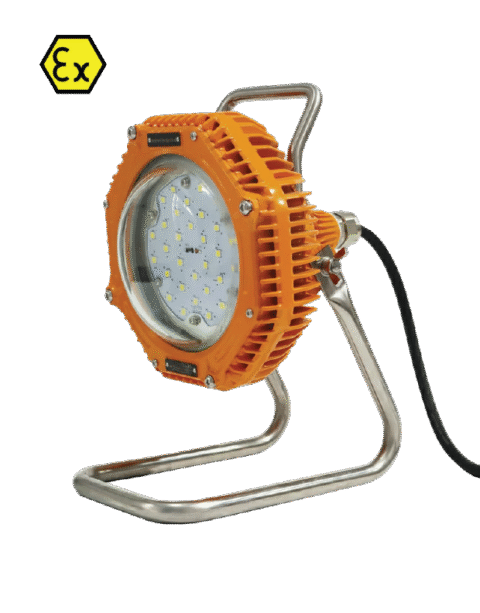
Portable Explosion-Proof Lighting
Portable lighting systems are designed to be moved and handled by personnel.
Examples include:
Temporary work lights
Portable LED lights
Inspection lights
Hand lamps
Portable lights face additional challenges because they are frequently:
Dropped
Impacted
Transported
Exposed to harsh conditions
As a result, portable explosion-proof lights often require additional durability and specialized certifications.
Key Features of Explosion-Proof Lighting
Rugged Construction
Explosion-proof fixtures are manufactured using heavy-duty materials such as:
Marine-grade aluminum
Stainless steel
Reinforced polycarbonate
Tempered glass
These materials provide exceptional durability in harsh industrial environments.
Sealed Enclosures
The enclosure prevents sparks, arcs, or flames from escaping into the surrounding atmosphere.
Impact Resistance
Portable fixtures are designed to withstand:
Accidental drops
Mechanical impacts
Vibration
Rough handling
Corrosion Resistance
Industrial environments often expose equipment to:
Saltwater
Chemicals
Moisture
Extreme temperatures
Corrosion-resistant materials extend fixture lifespan.
Thermal Management
Explosion-proof lights are engineered to maintain safe operating temperatures and prevent overheating.
Why Low Voltage Matters
One important design feature often found in portable explosion-proof lighting systems is low-voltage operation.
Low-voltage systems provide several advantages:
Improved Safety
Lower voltages reduce electrical hazards for workers.
Protection Against Power Surges
Industrial generators and temporary power systems can create voltage fluctuations.
Low-voltage designs help protect sensitive electronic components from damage.
Increased Reliability
Stable power delivery ensures consistent illumination in critical work areas.
Reduced Risk of Failure
Reliable operation minimizes unexpected outages in hazardous locations.
The Importance of Preventing Darkness
While explosions are a major concern, loss of lighting can also create serious safety risks.
When a light fails in a hazardous work environment, workers may experience:
Confusion
Disorientation
Trip hazards
Delayed emergency response
Increased accident risk
Maintaining illumination is therefore a critical aspect of workplace safety.
High-quality explosion-proof lighting systems are designed with reliability in mind to minimize unexpected failures.
Temperature Control and Safety
Heat is one of the primary ignition sources in hazardous environments.
Modern explosion-proof lighting systems often incorporate advanced thermal management technologies.
Cooler Operating Temperatures
Efficient LED technology generates less heat compared to traditional lighting systems.
Temperature Monitoring
Some systems include thermal sensors that continuously monitor operating conditions.
Automatic Power Adjustment
If excessive heat is detected, the fixture may automatically reduce output to maintain safe temperatures.
Extended Equipment Life
Cooler operation also increases the lifespan of electronic components.
Dust and Debris Protection
Industrial environments frequently expose lighting fixtures to:
Dust
Dirt
Chemical residues
Paint overspray
Airborne contaminants
Explosion-proof lights are designed to continue operating safely even when exposed to these conditions.
Advanced thermal protection systems help prevent overheating caused by accumulated debris or restricted airflow.
This feature is particularly valuable in manufacturing facilities, paint booths, and processing plants.
Long-Term Reliability
One of the major advantages of premium explosion-proof lighting systems is their long service life.
Industrial users often expect lighting fixtures to remain operational for many years under demanding conditions.
Benefits include:
Reduced maintenance costs
Fewer replacements
Lower downtime
Improved productivity
LED explosion-proof lights commonly provide service lives exceeding 50,000 hours.
In many facilities, fixtures remain in operation for ten years or more with minimal maintenance requirements.
Hazardous Area Classifications
Explosion-proof lighting must be selected according to the specific hazardous environment.
Common classifications include:
Class I
Locations containing flammable gases or vapors.
Examples:
Oil refineries
Fuel storage facilities
Petrochemical plants
Class II
Locations containing combustible dust.
Examples:
Grain elevators
Flour mills
Sugar processing facilities
Division 1
Hazardous substances are present during normal operations.
Division 2
Hazardous substances are present only under abnormal conditions.
Proper classification is essential when choosing explosion-proof lighting.
Certification Matters
Not all hazardous-area lights offer the same level of protection.
Before purchasing explosion-proof lighting, buyers should always verify certification documents.
Certification confirms that the product has been tested and approved for specific hazardous environments.
Common certifications include:
ATEX
IECEx
UL
Intertek
CSA
These certifications provide assurance that the lighting fixture complies with recognized safety standards.
Why Documentation Is Important
Certification documentation serves several purposes:
Safety Verification
It confirms that the fixture is approved for its intended application.
Insurance Requirements
Insurance providers often require proof of compliance.
Regulatory Compliance
Documentation demonstrates adherence to local and international standards.
Project Records
Safety managers and engineers need certification records for audits and inspections.
Always request certification documents before purchasing explosion-proof lighting equipment.
Choosing the Right Explosion-Proof Light
When selecting explosion-proof lighting, consider the following factors:
Hazardous Area Classification
Ensure the fixture matches the area’s classification.
Environmental Conditions
Evaluate exposure to:
Water
Dust
Chemicals
Extreme temperatures
Mounting Requirements
Determine whether fixed or portable lighting is required.
Voltage Requirements
Select a fixture compatible with available power sources.
Light Output
Ensure adequate illumination for the work area.
Durability
Choose fixtures designed for the environmental challenges of the application.
Certification
Verify compliance with applicable safety standards.
Benefits of LED Explosion-Proof Lighting
Modern LED technology offers significant advantages over traditional lighting systems.
Energy Efficiency
LED fixtures consume less power while delivering high illumination levels.
Longer Lifespan
LEDs typically last much longer than incandescent or fluorescent lamps.
Reduced Maintenance
Fewer replacements reduce maintenance costs and downtime.
Instant Illumination
LED lights reach full brightness immediately.
Improved Reliability
LED technology performs well in harsh industrial conditions.
The Future of Hazardous Area Lighting
Explosion-proof lighting continues to evolve with advancements in:
LED technology
Thermal management
Smart controls
Wireless monitoring
Energy efficiency
Future systems will offer even greater reliability, safety, and operational performance.
As industrial facilities focus increasingly on worker safety and environmental responsibility, demand for advanced explosion-proof lighting solutions will continue to grow.
Conclusion
Explosion-proof lighting is a critical safety component in hazardous industrial environments. These specialized fixtures are designed to prevent electrical sparks, arcs, and excessive heat from igniting flammable gases, vapors, or combustible dust.
Whether installed permanently or used as portable work lights, explosion-proof fixtures help protect workers, equipment, and facilities from catastrophic accidents. Features such as rugged construction, low-voltage operation, thermal management, and certified safety standards ensure reliable performance even in the most demanding environments.
When purchasing explosion-proof lighting, always verify hazardous-area classifications, certification documents, and product specifications. Choosing the correct explosion-proof lighting solution is not only a regulatory requirement but also an investment in workplace safety, operational reliability, and long-term business success.
Get in Touch with Sensor Control LLC
Looking for a reliable supplier of explosion proof lighting that meets the highest global safety standards?
Contact Information:
Website: sensor-control.ae
Email: sales@sensor-control.ae
Phone: +971502447100