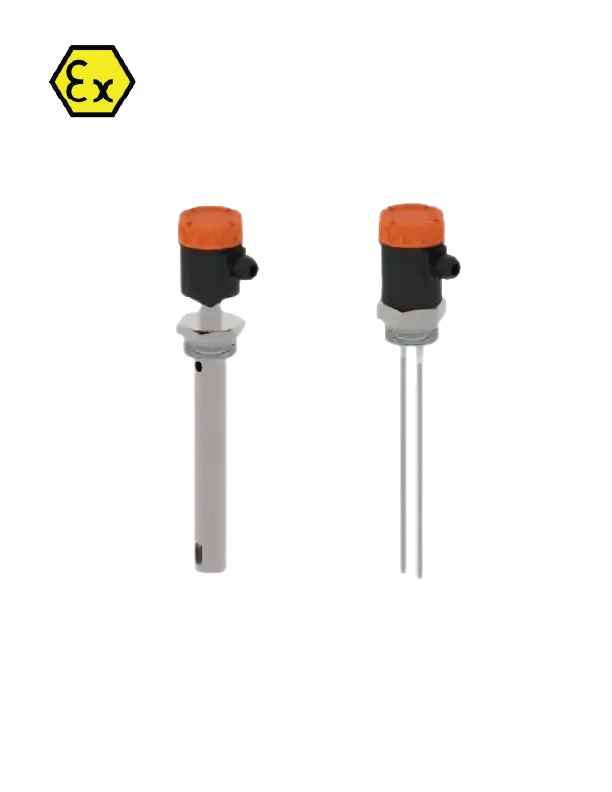
A Tuning Fork Level Switch is one of the most reliable and widely used level detection devices in industrial automation. It is designed to detect the presence or absence of liquids, powders, granules, and other bulk materials inside tanks, silos, hoppers, and pipelines. Due to its simple design, high accuracy, and low maintenance requirements, tuning fork level switches are commonly used in industries such as water treatment, food processing, chemical manufacturing, oil and gas, pharmaceuticals, and mining.
The operating principle of a tuning fork level switch is based on the vibration of a fork-shaped probe. By monitoring changes in the vibration frequency, the device can determine whether the fork is immersed in a material or exposed to air.
What is a Tuning Fork Level Switch?
A tuning fork level switch is an electromechanical sensor that consists of a fork-shaped probe and an electronic control circuit. The probe contains piezoelectric crystals that continuously vibrate the fork at its natural resonant frequency.
When the fork is free and exposed to air, it vibrates at a calibrated frequency. However, when the fork comes into contact with a liquid or solid material, the vibration characteristics change. The electronic circuit detects this change and switches the output signal accordingly.
This output can be used to activate alarms, start or stop pumps, open or close valves, and control various industrial processes.
Working Principle of a Tuning Fork Level Switch
The working principle of a tuning fork level switch is based on frequency variation caused by contact with a material.
1. Normal Condition (Fork in Air)
When the tuning fork is not in contact with any material, the piezoelectric crystals continuously excite the fork, causing it to vibrate at its natural resonant frequency.
The vibration frequency remains stable and is constantly monitored by the electronic circuitry inside the device.
2. Material Contact
As the level of liquid or solid material rises and reaches the tuning fork, the material surrounds the fork tines.
The presence of the material creates:
Additional mass loading
Damping effects
Reduced vibration amplitude
Lower resonant frequency
Because of these effects, the vibration frequency decreases significantly.
3. Frequency Detection
The electronic control circuit continuously compares the current vibration frequency with the calibrated reference frequency.
When the frequency drops below a predetermined threshold, the electronics recognize that the fork has been covered by material.
4. Output Switching
Once the change is detected, the switch changes its output state.
The output can:
Trigger an alarm
Turn a pump ON or OFF
Activate a relay
Control filling or emptying operations
Send signals to a PLC or control system
5. Material Removal
When the liquid or solid level falls below the fork, the fork is no longer affected by the material.
The vibration returns to its original natural frequency, and the output switches back to its normal state.
This process allows continuous monitoring of minimum and maximum material levels.
High-Level Alarm Operation
One common application of a tuning fork level switch is overfill protection.
In a high-level alarm installation:
The switch is mounted near the top of a tank.
As the tank fills, the liquid eventually reaches the tuning fork.
The vibration frequency decreases.
The control circuit detects the change.
The output signal activates an alarm or stops the filling pump.
This prevents tank overflow and product loss.
Low-Level Alarm Operation
Tuning fork level switches are also used for low-level detection.
In this configuration:
The switch is mounted near the minimum operating level.
When the material level falls below the fork, the vibration frequency returns to its original value.
The electronics detect the change.
The output activates an alarm or starts a refill pump.
This helps prevent dry running of pumps and ensures continuous process operation.
Installation Methods
Tuning fork level switches can be installed in several ways depending on the application.
Top Mounting
The switch is installed through the top of the tank.
This arrangement is commonly used for:
High-level alarms
Bulk storage tanks
Silos
Hoppers
Side Mounting
The switch is mounted through the side wall of the tank.
This installation is suitable for:
Point-level detection
Low-level alarms
Process vessels
Pipelines
Proper positioning ensures accurate level measurement and reliable operation.
Applications of Tuning Fork Level Switches
These switches are widely used in various industries because they can detect different materials regardless of conductivity or dielectric properties.
Water and Wastewater Industry
Used for:
Tank overflow protection
Pump control
Water level monitoring
Chemical Industry
Used to detect:
Acids
Solvents
Chemicals
Corrosive liquids
Food and Beverage Industry
Suitable for:
Milk tanks
Beverage processing
Sugar storage
Grain silos
Pharmaceutical Industry
Used for sanitary and hygienic process monitoring.
Oil and Gas Industry
Applied in:
Fuel storage tanks
Lubricant systems
Process vessels
Mining and Cement Industry
Used to monitor:
Powders
Granules
Cement
Bulk solids
Advantages of Tuning Fork Level Switches
High Reliability
The technology is simple and highly dependable, making it suitable for critical industrial applications.
No Calibration Required
Most tuning fork level switches are factory calibrated and require minimal adjustment.
Low Maintenance
With no moving mechanical parts, maintenance requirements are very low.
Suitable for Various Materials
They can detect:
Liquids
Powders
Granules
Slurries
Bulk solids
Fast Response Time
The switch reacts quickly to level changes, ensuring accurate process control.
Long Service Life
The robust design allows operation in harsh industrial environments for many years.
Conclusion
A tuning fork level switch is a highly effective point-level detection device used throughout modern industry. It operates by continuously vibrating a fork-shaped probe at its natural frequency using piezoelectric technology. When the fork comes into contact with a liquid or solid material, the vibration frequency changes due to added mass and damping effects. The electronic control circuit detects this change and switches the output signal to indicate material presence or absence.
Whether used for high-level alarms, low-level alarms, pump protection, overflow prevention, or process automation, tuning fork level switches provide accurate, reliable, and maintenance-free operation. Their ability to work with a wide range of materials makes them one of the most popular level sensing solutions in industrial applications worldwide.
Contact Information:
- Website: sensor-control.ae
- Email: sales@sensor-control.ae
- Phone: +971502447100