
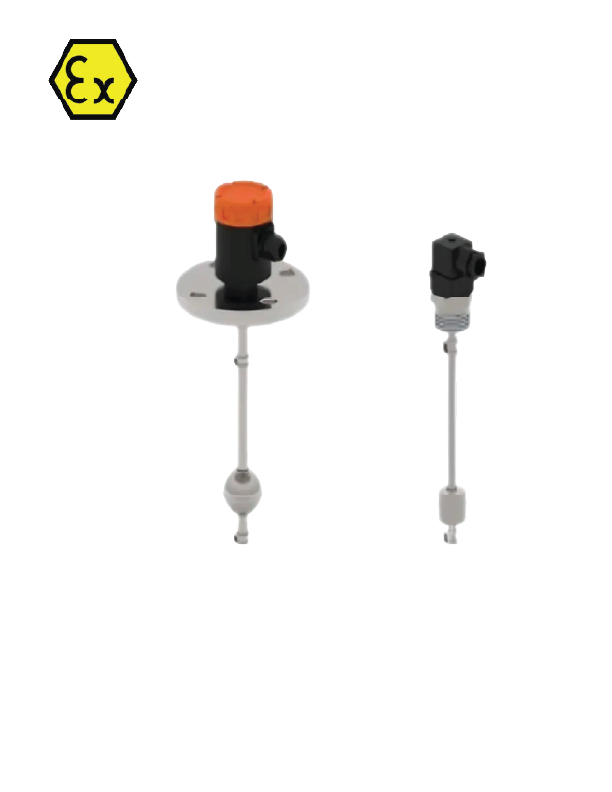
Water Level Sensor
We are one of the leading suppliers of water level sensor in UAE, which provide you with high-quality and durable solutions. Our water level sensor provide highly accurate measurements, are durable, and can be installed easily. We offer you products at very competitive prices and exceptional customer service.
- Float Level Sensor – Economical and simple sensor for measuring level in tanks and water tanks.
- Capacitive Level Sensor – Measures level by detecting changes in capacitance.
- Conductive Level Sensor – Suitable for conductive fluids such as water and chemicals.
- Magnetic Level Sensor – Uses magnetic floats and magnetic reed switches.
- Vibrating Fork Level Sensor – Popular sensor used in the industry for liquids and slurries.
- Submersible Level Sensor – Installed inside borewells, tanks, and reservoirs.
Industrial water level sensors work by constantly sensing and measuring the level of liquid present within tanks, reservoirs, pipes, or process equipment. Industrial water level sensors incorporate highly sophisticated sensing techniques such as ultrasonic, radar, float, capacitive, hydrostatic, and conductive sensing technologies to facilitate accurate measurement. The level of liquid present is measured and then converted to an electric signal, which is sent to control panels or automated machinery. Water level sensors help industries prevent overflow of liquids from tanks, protect pumps from being run dry, minimize wastage of water, and enhance operational efficiency. Industries employing water level sensors include water treatment plants, oil and gas industries, chemical processors, food and beverages manufacturing plants, marine sectors, and industrial automation sectors.
Float Level Sensor Working Principle
The working principle of a float level sensor lies in the mechanical mechanism that involves the rising and falling movement of the buoying material based on the fluid level in the tank or vessel. In particular, the device includes a floating body which could be made of different materials, such as plastic, stainless steel, or another light substance, attached to the switch or magnetic system.
Whenever the water level alters, the sensor begins moving up and down together with the surface of the liquid. At the moment when the fluid level gets to a certain point, the buoy triggers a reed switch, magnetically controlled one, or microswitch producing the electric signal sent to the controller, alarm system, or pump control unit.
Float level sensors find extensive application in various industries, including water and sewage processing, industrial water tanks, chemical equipment monitoring, and even the analysis of the fuel volume in vehicles due to their simple functioning principle, reliability, and economic performance. Such sensors require little maintenance and are quite efficient in both household and industrial settings.
Capacitive Level Sensor Working Principle
The capacitive level sensor uses capacitive changes due to the change in the amount of liquid in a tank or container. Capacitive level sensors consist of two electrodes that make up a capacitor. A change in the liquid level in the tank leads to a change in the dielectric constant between the two electrodes, which results in a variation in capacitance. Capacitance is measured and converted to electrical signals to measure and monitor the liquid levels.
Capacitive level sensors can detect the liquid level of both conductive and non-conductive fluids. These sensors are used for measuring and monitoring water, chemical liquids, oils, food items, and pharmaceutical liquids in many industries.
One of the main benefits of capacitive level sensors is the lack of mechanical components in their construction. These sensors are very sensitive and compact in size. Capacitive level sensors can be used continuously to monitor and measure liquid levels. Capacitive level sensors are widely used in automation industries, chemical industries, water treatment plants, and food manufacturing industries.
Conductive Level Sensor Working Principle
A conductive level sensor measures the electrical conductivity of liquids to measure the liquid level in a storage tank or any other containment. In a conductive level sensor, the measurement points are in form of conductive probes which are positioned strategically inside the tank. The presence of a liquid completes an electric circuit since liquid such as water, wastewater, acids, and chemicals are conductive and can transmit electrical currents.
After completing the circuit, an electric current is transmitted to the controlling instrument, alarm, and pump controller. It may be used to control pumps, start alarms and control filling and drainage process automatically. Conductive sensors are typically used for point-level measurement where both high-level and low-level applications are involved.
Conductive level sensors are commonly used in many applications in industry water treatment plants, chemical industries, boilers, cooling units, and wastewaters. Conductive level sensors are famous due to their simple design, effectiveness, and minimal maintenance requirements. They are inexpensive ways of measuring liquid level using automatic controls.
Magnetic Level Sensor Working Principle
The principle behind a magnetic level sensor involves the use of a magnetic float and reed switch system to measure and monitor the liquid levels present within tanks and containers. A magnetic level sensor comprises a float equipped with a magnet which moves up and down depending on the liquid level through the guide tube. Multiple magnetic switches are fitted inside the guide tube at varying positions.
Changes in liquid level cause the magnetic float to move, causing activation of the switches due to the magnetic field. The reed switches create electric signals sent to monitoring systems, alarms, and pump controls for automatic control and liquid level indication. Industries can therefore measure high or low liquid levels continuously with precision.
The use of magnetic level sensors is prevalent in various industries due to their reliability, long life span, and durability in extreme conditions. Magnetic level sensors work well with water, chemicals, oils, fuel, and corrosive liquids. The use of magnetic level sensors is common in oil and gas industries, chemical processing industries, water treatment plants, and storage tanks.
Vibrating Fork Level Sensor Working Principle
The vibrating fork level sensor operates based on the concept of varying frequency vibration. The fork level sensor uses a vibrating fork that produces vibration at a constant frequency. The vibration frequency produced by the tuning fork is based on the piezoelectric crystal. Whenever there is contact between the vibrating fork and the liquid medium in the storage tank, a damping effect occurs due to the liquid density, hence causing a decrease in vibration frequency.
As a result, the change in vibration frequency triggers an electrical switching output signal. The generated signal is employed in raising alarms, pumping, or controlling processes. The vibrating fork level sensor is predominantly applied in point-level detection purposes like high level and low-level detections. Vibrating fork level sensors can be applied in measuring a wide variety of liquids such as water, chemicals, oils, and viscous media. Vibrating fork level sensors work effectively in high-pressure, high-temperature, or turbulent environments. Vibrating fork level sensors are commonly applied in the chemical industry, oil and gas industry, food manufacturing, and water treatment facilities.
Submersible Level Sensor Working Principle
In a submersible level sensor, the level of liquid inside the tank, bore well, reservoir, or any other water storage facility is determined by measuring the hydrostatic pressure exerted on the device when it is immersed within the liquid. The deeper the level of immersion, the higher is the pressure that exerts on the sensor. The liquid level is converted into an electrical signal based on the pressure.
They operate under water, and therefore they are made from highly durable and corrosion-proof materials. The electrical signal produced can then be used to measure the liquid level in real time or be transferred to another monitoring system such as controllers or display unit.
Applications of a submersible level sensor include water treatment facilities, groundwater monitoring, sewage management, bore wells, dams, and water storage tanks. Such sensors are capable of providing an accurate level of liquid inside the tanks regardless of the depth or location of the tank. Their main advantage is high accuracy, reliable operations, durable, small and easy to maintain. Submersible level sensors play a crucial role in industrial operations because they help monitor the level of water in storage tanks.
Contact Information:
- Website: Sensor-Control.ae
- Email: sales@sensor-control.ae
- Phone: +971502447100
As a top-tier Ex-proof products supplier in UAE, Sensor Control LLC is dedicated to powering industries with high-quality motors, ensuring operational excellence and efficiency across the UAE, Saudi Arabia, and the Middle East. Choose Sensor Control LLC, the leading motors supplier in UAE, for all your motor needs.
“We specialize in explosion-proof air conditioning units, serving Dubai and surrounding regions, including the UAE, Middle East, and North Africa. Our commitment to excellence ensures top-quality products that meet stringent safety standards. We pride ourselves on competitive pricing without compromising on quality. Explosion proof air conditioner UAE, explosion proof air conditioner UAE, explosion proof air conditioner UAE, explosion proof air conditioner UAE, explosion proof air conditioner UAE, explosion proof air conditioner UAE, explosion proof air conditioner UAE, explosion proof air conditioner UAE, explosion proof air conditioner UAE, explosion proof air conditioner UAE.”

